My friend Bruce Rosenthal has been saying this for years: most association professionals approach corporate sponsorships with the wrong question. They ask what they have to sell instead of what the partner needs to achieve.
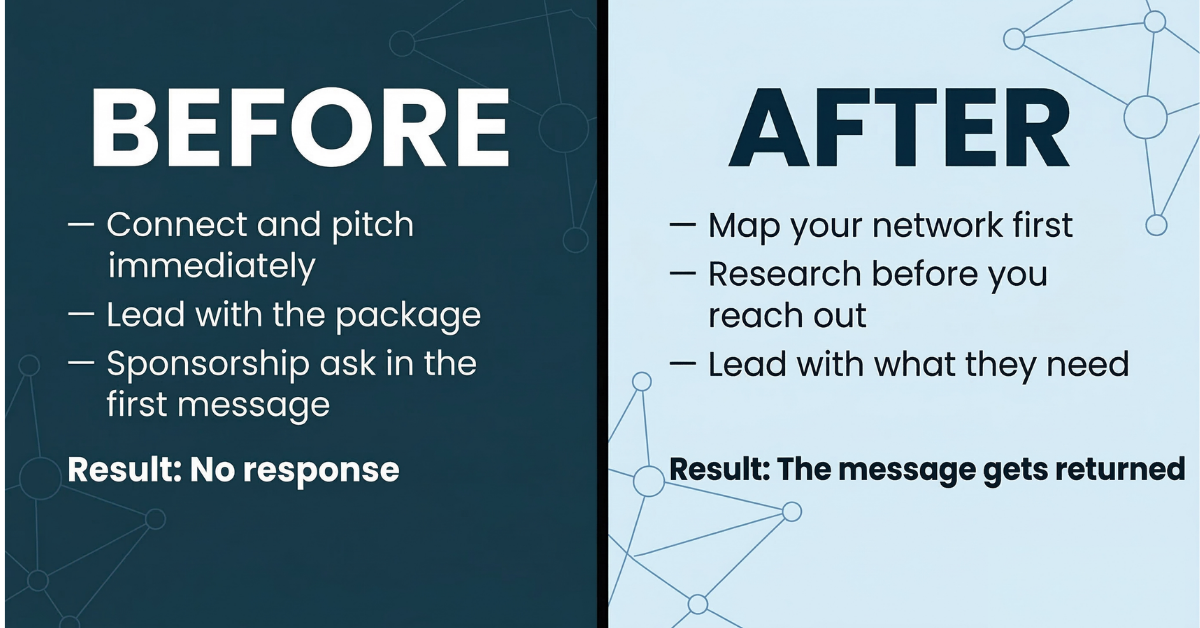
I have been saying something parallel since 2011. Most association professionals use LinkedIn with the wrong instinct. They treat it like a whack-a-mole list — connect, skip every step in between, go straight to the ask. Sponsorship packages in the first message. Booth opportunities before a single real conversation.
Bruce and I are describing the same failure from different angles. And LinkedIn, used correctly, is a meaningful part of the fix.
LinkedIn Is an Intelligence Platform. Use It Like One.
The value of LinkedIn is not in who you can reach. It is what you can learn before you reach anyone.
Before any outreach, map your existing network. This is where most people skip ahead — they want new prospects when their most valuable asset is already sitting in front of them. Board members. Past conference speakers. Committee chairs. Former colleagues are now at companies in your space. Every one of those is a warm path into a corporate partner conversation. A warm introduction from someone already trusted outweighs any cold message you will ever send.
Then, research before you pitch. Sales Navigator surfaces signals about where a company is actually headed — what leadership is prioritizing publicly, where the company is investing, and what is shifting. Not the about page. Not last year's press release. What their world looks like right now.
That intelligence is what earns you the right to the conversation.
Bruce describes the difference plainly. The wrong call: "Our convention is four months out. We have two platinum slots left. Call me back within a week." The right call: "I saw your company just launched a women in leadership program. We just launched one for our members. Can we talk?"
One of those calls gets returned. The research is why.
The Ask Should Feel Inevitable
When you have done the work, the sponsorship conversation is not a pitch. It is the natural conclusion of a relationship that already exists.
Bruce's core argument is that the associations winning at corporate partnerships see corporate partners as collaborators, not customers. "The association's members and the corporate partners' customers are the same people." When you understand that, the whole dynamic shifts. You are not managing a vendor. You are working with an organization trying to solve the same problems for the same professionals you serve.
That understanding is what makes the right call possible. A healthcare association knew its corporate partner — a consulting firm — well enough that when a 1,100-page regulation landed, and members were overwhelmed, someone picked up the phone. The partner came in, did most of the work, co-branded every slide, and put their CEO on stage alongside the association's. Members got what they needed. The association generated $160,000 in partnership revenue. The renewal required almost no convincing because both sides remembered exactly what that relationship had produced.
That partnership did not start with a sponsorship package. It started with knowing your partner well enough to make the call.
The Stakes Are Higher Than They Were
Five years ago, Bruce's competitive analyses for associations surfaced 10 to 15 places where corporate partners could go to reach members. Now it is 40 to 60 — other associations, trade publications, LinkedIn groups, and companies that have built direct audiences of your members and can reach them anytime without you.
Companies are not just choosing between your sponsorship and another association's. They are comparing it to their own LinkedIn presence, their own content, their own community. When that math favors going direct, they will.
The association professional who shows up as a strategic partner — who understood the company's world before asking for anything — wins that conversation. The one who leads with a package of logo placements gets the polite pass.
Start Before the Pitch
Open LinkedIn before you open your rate card.
Look at what their leaders are writing about. Find the mutual connection who can open a door. Understand what the company is building before you say a word about what you are selling.
Then reach out with something specific. Something that shows you were paying attention. Something that makes the conversation about what they need, not what you have.
That is the shift. LinkedIn makes it possible. Bruce's work shows what it produces.
Colleen McKenna is the founder of Intero Advisory, a LinkedIn strategy and training firm she has led since 2011. She is a PAR GOAT Award winner and a regular contributor and speaker at Professionals for Association Revenue events. She works with professionals and organizations who want to use LinkedIn with the intention of building relationships, not contacts.
.png)